Last updated: November 19, 2026
Quick answer: after offer acceptance, most buyers move through 7 to 9 steps before closing, and the first 24 hours usually set the pace. For the topic What Happens After Offer Acceptance: Buyer’s Timeline to Closing: related questions, the path to closing usually moves through deposit, inspections, underwriting, appraisal, title work, final loan approval, and a last signing day. For a buyer using a home sale contingency, the biggest risk is not one step failing by itself; it is one delay pushing your sale and your purchase out of sync.
A real-estate closing timeline is a chain of deadlines, not a single event. The order can shift a little by lender, state, and contract terms, but the work usually starts the same day the offer is accepted and ends when funds are transferred and the keys change hands.
Key takeaways
- Offer acceptance does not mean the home is yours yet; it starts a list of contract deadlines.
- The first week matters most because deposit, disclosures, and inspection timing can set the pace.
- The lender, appraiser, title company, and escrow officer each add their own step.
- A home sale contingency makes timing tighter because two closings may need to line up.
- One missed document or a slow response can move closing by days or weeks.
What happens in the first 24 hours?

The first 24 hours after offer acceptance are for contract setup, not celebration. The buyer usually signs the purchase agreement, sends the earnest money deposit, and gets the lender started on the file.
This is also when the clock starts on key dates written into the contract. A home inspection window, loan application deadline, and contingency removal date can all begin here. If the buyer is using a home sale contingency, this is the time to confirm whether the contract ties the new purchase to the sale of the current home or to a specific closing date.
A generic article often skips this part, but it matters because the first day sets the pressure for the rest of the timeline. If the deposit is late or the paperwork is incomplete, the rest of the file can slow down before it even leaves the starting line.
How does the buyer’s timeline usually move?
The buyer’s timeline usually moves from contract execution to due diligence, then to lender review, then to closing. That path often includes inspection, appraisal, underwriting, title review, and final signing.
The exact number of days depends on the contract and lender, so it is safer to think in stages than in a fixed calendar. Here is the practical order most buyers see:
- Deposit earnest money.
- Schedule the home inspection.
- Send documents to the lender.
- Order the appraisal, if the loan requires one.
- Review title and insurance details.
- Resolve repair requests or credit issues.
- Clear loan conditions.
- Do the final walkthrough.
- Sign closing papers and fund the loan.
A buyer with a home sale contingency has one more moving part: the sale of the current home. If the first home has not sold by the contract deadline, the buyer may need to request an extension, activate a backup plan, or walk away if the agreement allows it. For related timing details, see home sale contingency and contingent offer.
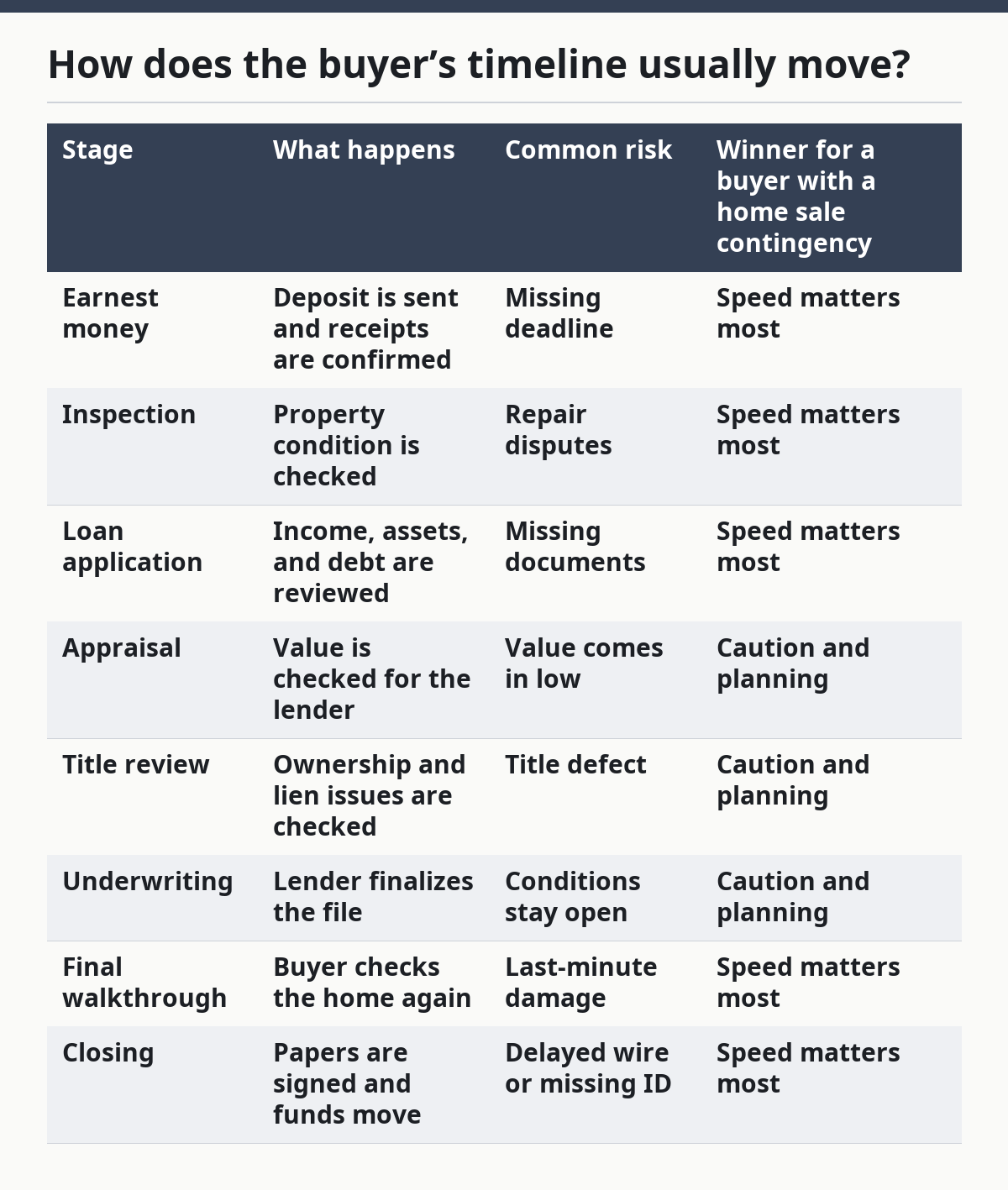
| Stage | What happens | Common risk | Winner for a buyer with a home sale contingency |
|---|---|---|---|
| Earnest money | Deposit is sent and receipts are confirmed | Missing deadline | Speed matters most |
| Inspection | Property condition is checked | Repair disputes | Speed matters most |
| Loan application | Income, assets, and debt are reviewed | Missing documents | Speed matters most |
| Appraisal | Value is checked for the lender | Value comes in low | Caution and planning |
| Title review | Ownership and lien issues are checked | Title defect | Caution and planning |
| Underwriting | Lender finalizes the file | Conditions stay open | Caution and planning |
| Final walkthrough | Buyer checks the home again | Last-minute damage | Speed matters most |
| Closing | Papers are signed and funds move | Delayed wire or missing ID | Speed matters most |
What does the lender do after acceptance?

The lender starts the formal review after acceptance, and that review can be the longest part of the closing path. The lender checks income, assets, employment, credit, debt, and the property itself before giving final approval.
This is where many buyers get surprised. The pre-approval letter is not the same as final approval, and a lender can still ask for more documents after the offer is accepted. Bank statements, pay stubs, tax forms, and explanations for large deposits are common requests.
For a buyer with a home sale contingency, the lender timeline matters twice. The new mortgage must be approved while the current home is still on the market or already under contract. If the sale drags, the lender may ask for updated financial documents before closing. That can happen even if the file looked complete a week earlier.
The consumer-facing summary from the Consumer Financial Protection Bureau on mortgage closing costs is a useful reference point for the lending side of the process: https://www.consumerfinance.gov/owning-a-home/closing-disclosure/ . It explains the Closing Disclosure and the need to compare final numbers before signing. See also the CFPB’s general home-buying resources at https://www.consumerfinance.gov/owning-a-home/.
What can slow closing down?
Closing slows down when documents, timing, or property issues do not line up. The most common delays come from the inspection, appraisal, title work, underwriting conditions, and the seller’s response to repair requests.
Here is the plain truth: one step can force the next step to wait. A low appraisal can trigger a renegotiation. A title issue can hold up the lender. A missing pay stub can keep underwriting from issuing final approval.
A home sale contingency adds one more delay point. If the buyer’s current home has not sold, the new closing may depend on that sale finishing first. That can create a chain reaction: the buyer cannot close until the sale closes, and the sale may depend on the buyer finding their own replacement home.
A helpful way to think about this is by cause and effect:
- Inspection issue: can lead to repair requests or credits.
- Appraisal issue: can lead to a price change, extra cash, or a cancelled deal.
- Underwriting issue: can lead to more paperwork or a delayed clear-to-close.
- Title issue: can block recording until the defect is fixed.
- Sale contingency issue: can push both timelines out together.
The CFPB’s mortgage closing resources and the American Land Title Association’s consumer materials are useful touchpoints for these issues; ALTA explains title insurance and the title process at a high level: https://www.alta.org/consumer-resources/ . Those sources are worth checking because title and closing documents are where surprises often hide.
How does a home sale contingency change the timeline?
A home sale contingency makes the buyer’s closing timeline depend on another property sale, so it adds risk and coordination. That is useful when a buyer needs the equity from the current home, but it is weak when the seller wants a fast, clean closing.
The contingency usually creates one of three pressure points. First, the current home may still need to go under contract before the new purchase can move forward. Second, the buyer may need both transactions to close near the same time. Third, a delay in the sale may force the buyer to ask for an extension on the purchase contract.
That is why this structure can work best for buyers who have a clear backup plan and a flexible seller. It is not a good fit when the purchase contract has a hard closing date and no room for delay.
The trade-off is simple. A home sale contingency can protect a buyer from carrying two homes at once, but it can also make the buyer less attractive in a competitive market. If the seller has stronger offers without that condition, the contingent offer often loses ground.
What should happen in the final week?
The final week should be used to clear the last lender conditions, confirm cash to close, and prepare for the final walkthrough. This is the point where small mistakes can still delay signing.
The buyer should confirm the closing date, the wire instructions, the amount due, and the photo ID required at signing. The lender should have issued the clear-to-close or final approval. The title company or closing agent should have the final settlement statement ready.
The final walkthrough matters because it is the last chance to confirm the property is in the agreed condition. If repairs were promised, this is when those repairs should be checked. If the seller moved out, the home should be reasonably empty and unchanged from the contract terms.
A slow final week often comes down to one missing document. A buyer who responds quickly to lender requests may be more likely to keep the original closing date than a buyer who waits a day or two on every email. For a checklist, see final walkthrough and wire transfer instructions.
Which part matters most for a buyer?
The lender review and the contingency timing matter most because they control whether the deal can actually close on schedule. Inspection matters for price and repairs, but underwriting and sale timing decide whether the buyer can finish the purchase at all.
For a buyer with a home sale contingency, a contract with enough time for both transactions and a seller who understands the risk is often the more practical setup. That is the right fit when the buyer has limited cash and needs proceeds from the first sale. It is not the right fit when the buyer needs certainty, speed, or a very short closing window.
What are the exception scenarios?
The overall timeline can flip when the deal is unusually simple or unusually complicated. If the buyer is paying cash, the lender stage disappears and closing can move faster because there is no mortgage underwriting. If the home has title problems, the title stage becomes the main blocker and can outrun everything else. If the inspection turns up major repairs, the buyer may pause or renegotiate before the lender finishes. If the current home sells early, the home sale contingency stops being the main risk and the file can move like a normal purchase.
What should a buyer do next?
A buyer should treat the period after offer acceptance like a deadline calendar, not like a waiting period, and should consult the lender, agent, or attorney on dates that affect the contract. The safest move is to answer lender requests fast, keep inspection and title questions moving, and watch the sale contingency dates closely. For a buyer who depends on selling a current home, the right goal is not just closing the new home. The goal is lining up both closings so one does not break the other.
What if the seller asks for a faster closing?
A faster closing is possible only if the lender, title company, and seller all move at the same pace. The buyer’s file must already be clean, with documents ready and no open issues from inspection or underwriting. If the buyer also has a home sale contingency, a faster closing can be risky unless the current home is already far along.
Can the closing date change after offer acceptance?
Yes, the closing date can change if the inspection, appraisal, underwriting, or sale contingency creates a delay. The date changes by written agreement, not by guesswork. If the buyer or seller wants a new date, the contract usually needs an addendum or extension.
What is the biggest mistake buyers make?
The biggest mistake is assuming the offer acceptance date means the hard part is over. In reality, the hard part often begins there because the buyer now has to satisfy several separate deadlines at once. Missing one document or ignoring the sale contingency can push the whole deal off track.
Drafted with AI; not yet reviewed by a person.