Last updated: September 10, 2026
Key Takeaways
- Open windows for 15 to 30 minutes if weather allows.
- Keep a table or bench only if it fits with at least 24 inches of clearance around it.
- Leave 24 inches or more on each side of the bed where the room allows.
- Replace the $12 light bulb, patch the nail holes, and re-caulk the sink if needed.
A house can look bigger in half an hour. Really. These home staging tips that help sell house faster are about making rooms feel brighter, calmer, and easier to imagine living in — not about turning them into a showroom. Before photos or showings, focus on the fixes that change what buyers notice first: sightlines, clutter, and light.
Who this is for — and who should do something else
Homeowners, landlords, and listing agents all fit here, as long as the place is occupied or vacant and there’s usually a 1- to 4-week runway before the first open house. You already know the property is going on the market; you can move furniture, store items off-site, and spend a little on cleaning, paint, light bulbs, or minor repairs. To be fair, I’m not picturing a renovation budget. Staging works best when it stops well short of remodeling.
Major moisture damage? Active pests? Unsafe wiring? A roof leak? Then this is the wrong tool. Staging can’t disguise rot, a broken furnace, or a bad foundation report. Those need real repair first. And it won’t fix a pricing issue, either. Price a house far above comparable homes and no amount of styling will save it.
Good staging is temporary, neutral, and specific. A buyer should grasp the floor plan, the usable space, and each room’s purpose within 10 to 15 seconds of stepping inside. Less stuff. More light. More visible floor. But not an empty shell. A bedroom with only a mattress often feels smaller, not larger, and a dining room without a table can read like dead space. I’d rather see a few purposeful pieces than a house that looks like a moving truck already came and went.
Think of the job in three layers: clean, edit, emphasize. Clean removes dirt, smells, and clutter. Edit takes out anything that blocks movement or shrinks the room visually. Emphasize shows off the best 2 or 3 features in each space, like a fireplace, bay window, hardwood floor, or tall ceiling. Simple. Not easy, but simple.
What should I stage first if I only have one weekend?
Start where buyers start: the entry, living room, kitchen, primary bedroom, and main bathroom. Those five spaces usually set the tone, and they’re the ones most likely to end up in listing photos. So if you only have 48 hours, don’t burn time on the guest closet or the laundry shelf before you tackle those.
Pull out about one-third to one-half of the furniture in any room that feels crowded. What you want is circulation space — a path at least 30 to 36 inches wide where people walk, plus enough open floor for the eye to read the room’s shape. A sofa set 6 inches off the wall often looks better than one shoved into a corner because it gives the room definition. Verify that doors swing open fully, drawers clear nearby furniture, and people can move without turning sideways. If a chair blocks a walkway or a table edge cuts into a door swing, the room is too full.
Then clean the hard surfaces. Kitchen counters should be almost bare; I’d keep maybe one tray, a kettle, and a bowl of fruit if the room can handle it. In the bathroom, leave only a soap dispenser, a folded hand towel, and maybe one neutral accessory. Verify that sink rims, mirror edges, and toilet tops are clear. Hair tools, dish racks, dish soap, pill bottles, sunscreen — if those are still out, the room is not staged yet.
Lighting comes next. Swap out burned-out bulbs and, where possible, use matching bulbs in the same room so the color doesn’t jump from warm to blue. A common target is 2700K to 3000K in living areas, which gives a warm white look without going yellow. Check that every room has working overhead light, or at least two light sources in larger spaces. After sunset, dark corners make a photo look flat and a showing feel smaller. According to the U.S. Department of Energy, LED bulbs use at least 75% less energy and last up to 25 times longer than incandescent lighting, so this is one of those fixes that is both practical and cheap — well, usually cheaper than people expect.
Last, deal with smell and sound. Open windows for 15 to 30 minutes if weather allows. Clean litter boxes, garbage cans, and drains. Turn off noisy appliances during showings. If the odor comes from pets, smoking, mildew, or cooking grease, candles are the wrong answer. That smell will still be there.
How do you stage a house room by room?
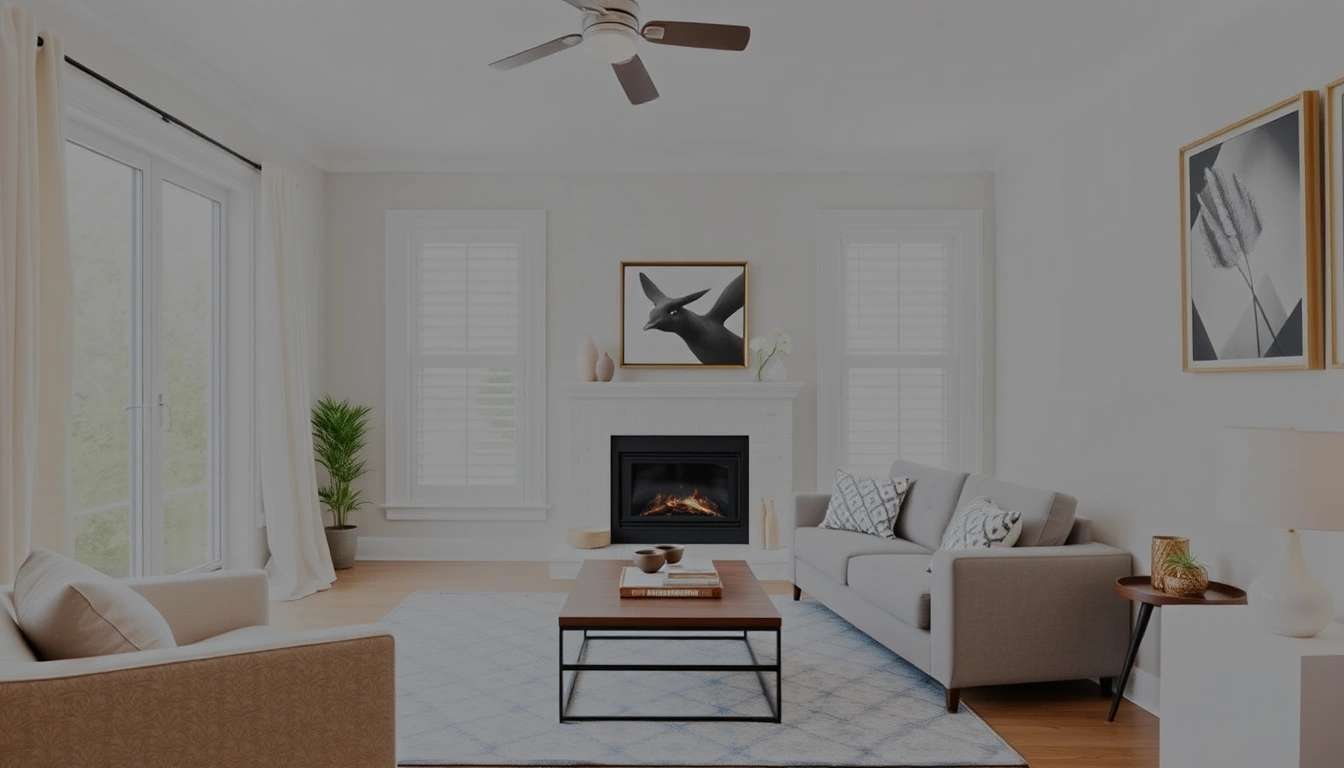
Stage each room around one clear purpose, then arrange the furniture and accessories so that purpose is obvious from the doorway. A staged room should answer two questions fast: “What is this space for?” and “How big is it?”
- Start at the entry and clear a 3-foot zone. Shoe piles, umbrellas, mail, pet leashes, and anything else that narrows the walkway need to go. Keep a table or bench only if it fits with at least 24 inches of clearance around it. Verify that the front door opens cleanly and the eye can travel into the next room. If the entry feels crowded, buyers often assume the whole house is tight.
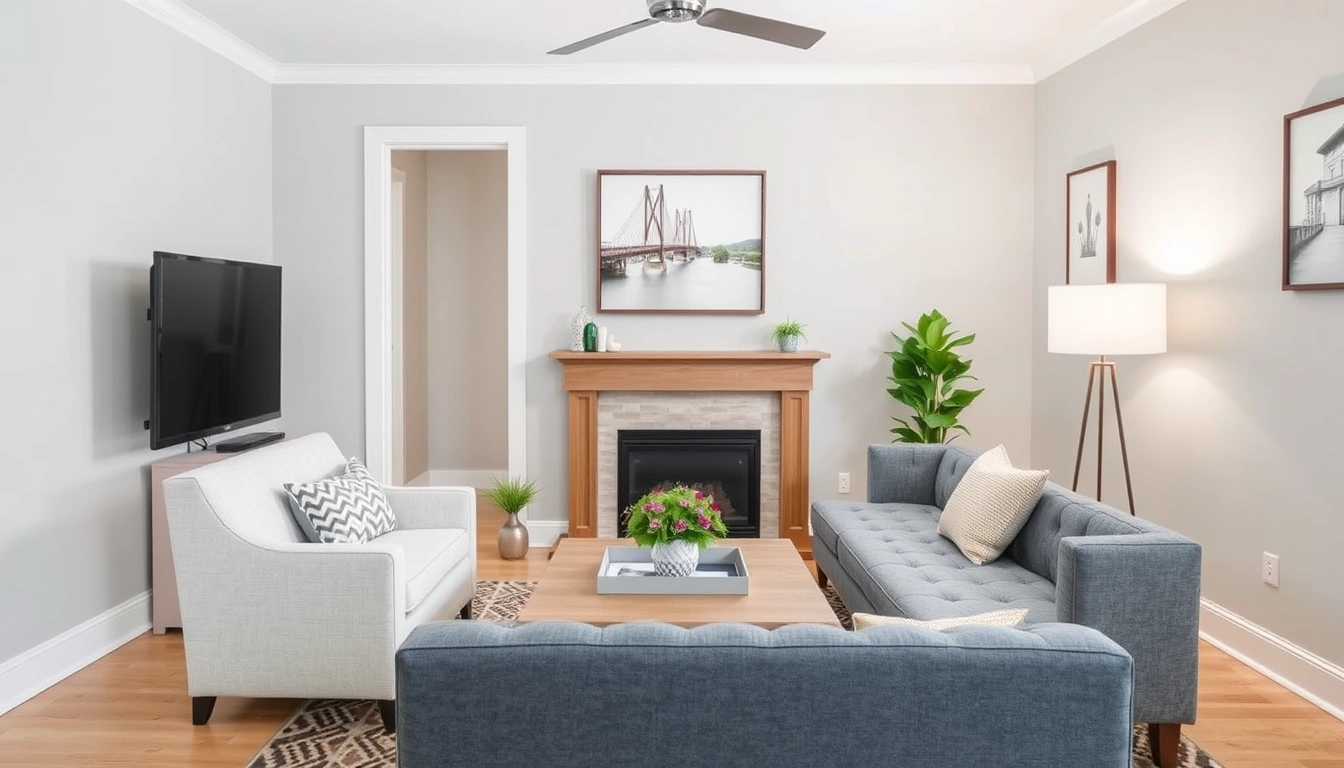
- In the living room, create one conversation group, not three mini-scenes. Pull seating into a single arrangement centered on a rug or coffee table, with roughly 18 inches between the sofa and table edge. If the rug is too small to anchor the furniture, the seating looks adrift. Verify that the arrangement leaves visible floor at the perimeter and a clear path through the room. If furniture interrupts walking lanes, remove a piece rather than squeezing it in.
- In the kitchen, clear the counters to at least 80 percent empty. Put away toaster ovens, knife blocks, dish soap, and drying racks. If the backsplash is nice, let it show. Verify that appliances are wiped, cabinet fronts are clean, and the sink is empty before photos. If the room needs clutter to feel functional, it is probably overfurnished or undercleaned.
- In the primary bedroom, use a bed, two lamps, and a pair of matching nightstands if possible. Leave 24 inches or more on each side of the bed where the room allows. Keep bedding simple: a solid coverlet, a plain duvet, and two or four pillows is usually enough. Verify that the bed is centered on the main wall and not jammed against a corner. If the bed makes the room look like there is no floor left, downsize the furniture or simplify the layout.
- In bathrooms, show clean lines and storage, not products. Close toilet lids, remove most bottles, and hang fresh white or light towels. A small plant or rolled hand towel can be enough. Verify that mirrors are streak-free and caulk lines are intact. If mildew stains or cracked grout dominate the room, no accessory will fix that.
- In dining areas, use a table scaled to the room. A table that leaves at least 36 inches between the table edge and walls or major furniture helps buyers read the space. Set the table lightly, if at all. Verify that chairs can slide out without scraping another piece. If the room doubles as storage, it will photograph as clutter unless stored items are removed first.
- In offices or flex rooms, stage one clear use only. A desk, chair, lamp, and one or two framed pieces are enough. If the room is too small for a true office, stage it as a nursery, guest room, or reading room instead of forcing a layout that does not fit. Verify that the room looks intentional from the doorway. If buyers cannot tell what the room is, they often undervalue it.
- Finish with the exterior and windows. Sweep porches, pressure-free clean the threshold, trim visible weeds, and wipe interior glass. Natural light matters, so clean the panes at least once before photos. Verify that blinds are open evenly and screens are not bent. If the first view is dark or neglected, the interior starts at a disadvantage.
This is where a lot of sellers drift into “make everything pretty” mode. I wouldn’t spend an afternoon styling every shelf in the house. Better to make each room legible, bright, and uncluttered; that’s what buyers actually remember. A house that reads quickly tends to show better than one stuffed with themed decor. For broader prep ideas, see our home selling checklist and real estate photography tips.
How do home staging tips that help sell house faster make a house feel expensive without spending much?
A house feels pricier when it looks calm, consistent, and maintained, even if the furniture is ordinary. That effect usually comes from subtraction, not shopping. For sellers comparing options, these home staging tips that help sell house faster can also support a cleaner listing price story.
Color discipline matters. Keep the main palette to three neutrals — white, warm gray, beige, or soft taupe — and repeat one accent color in small amounts. A home with ten accent colors looks busy in photos. One repeated tone looks intentional. The same idea applies to finishes: mix too many metals, wood stains, or patterns and the room starts to feel accidental. If you want a deeper example, our paint colors for selling a house guide covers what tends to photograph well.
Scale matters too. A room can be expensive to furnish and still look cheap. Oversized sectional sofas, tiny rugs, and curtains that hang too short make a ceiling feel lower and the room feel smaller. Curtains should hang high and wide enough to frame the window, and rugs should cover a meaningful footprint under the furniture group rather than floating like a bath mat. If you can’t size the rug correctly, I’d skip it instead of using one that shrinks the room. That math stops working fast.
Texture is the last layer. Smooth surfaces alone can feel flat, so bring in one or two tactile elements: linen, woven baskets, wood, or a matte ceramic vase. But keep the count low. Too many throw pillows, decorative books, or framed quotes read as clutter. A well-staged room usually has fewer than 10 visible decorative objects in a main living area.
Pay attention to surfaces people touch: cabinet pulls, faucet handles, door hardware, switch plates. Tarnished brass, greasy fingerprints, and chipped paint pull attention straight to maintenance. A cheap tube of painter’s caulk or a small can of touch-up paint can shift the mood of a room faster than a shopping trip. The National Association of Realtors notes in its staging resources that buyers respond to homes that are clean, repaired, and easy to picture living in.
This approach is not ideal for homes that rely on a very distinctive style to sell, such as a historic property where original trim, stained glass, or period built-ins are a selling feature. In those cases, neutralizing everything can sometimes wipe out the best part of the house. I’d still simplify, but I wouldn’t strip away the character buyers are paying for. If the property is older, the National Park Service preservation guidance can help you protect defining details while still presenting the home well.
The mistakes I see most often, and what they cost
The biggest mistake is staging for the owner’s taste instead of the buyer’s view. A room full of family photos, sports memorabilia, or loud collections may feel warm and personal to the seller, but it shrinks the audience. The cost is straightforward: buyers end up reading the room as your life, not imagining their own. The fix is to depersonalize enough that the house feels lived in, but not tied to one household.
Another common miss is stuffing too much furniture into a room. Sellers keep the extra chair because “there’s space,” but the room then photographs as cramped. Lost floor area. Confused circulation. That’s the trade-off. Better to store one or two pieces off-site and let the room breathe.
Hiding problems instead of fixing them is worse. A stained carpet, peeling caulk, or broken light fixture is not a styling issue. Buyers catch maintenance defects fast, and they often assume the hidden trouble is worse than what they can see. Replace the $12 light bulb, patch the nail holes, and re-caulk the sink if needed. If the carpet is badly worn, I’d rather see it professionally cleaned or replaced than covered with rugs everywhere.
Overdecorating for photos is another trap. Small bowls, books stacked six high, and too many plants make a house feel staged in the theatrical sense, not the market-ready one. Buyers can tell something is being hidden. One or two accessories per surface is usually enough. Less fuss. Better result.
Don’t ignore scent. Heavy fragrance, pet odor, damp towels, or cooking smells can undo good visual work in 30 seconds flat. The fix is cleaning, ventilation, and removing the source. Candles are not a repair.
And the exterior? That gets forgotten all the time. If the front step is dirty, the grass is overgrown, or the porch light is broken, buyers arrive already guarded. A clean threshold, trimmed edge, and working bulb can matter as much as a new throw pillow inside.
When should I stop DIY staging and change course?
Stop DIY staging when the house needs repair instead of presentation, or when the layout itself is fighting the sale. Staging is a finishing tool, not a structural one.
Strong odor from smoke, mildew, pets, or cooking grease: This means the issue is environmental, not decorative — get the source removed and cleaned before showing the home. Odor can be a fast turnoff because buyers may wonder what caused it.
Visible water stains, soft drywall, peeling baseboards, or warped flooring: This suggests moisture or leak damage — stop styling and address the problem first. A staged room with an unrepaired stain can make buyers think the house has active trouble.
Furniture cannot fit without blocking a 30-inch walkway: This means the room is functionally undersized for the current layout — remove pieces or stage the room for a different use. Forcing oversized furniture into a small space makes the home feel smaller than it is.
Kitchen or bath surfaces are too worn to clean up well: This means cosmetic wear may be beyond staging — repair, refinish, or replace the worst surface before the listing goes live. Buyers tend to focus on kitchens and baths, and tired counters or chipped tile can drag down the whole showing.
The home is empty and echoes badly: This means the space needs visual anchors — add a limited amount of furniture, especially in key rooms, or the house may feel cold and harder to understand. Empty rooms often photograph well and show poorly in person.
You are selling a highly distinctive property: