
Last updated: November 12, 2026
A purchase agreement can look harmless until one deadline or contingency turns into a real loss. Quick answer: read the sections that control money, timing, and escape rights before you sign. If you are learning how to read a purchase agreement before signing, start with the money terms, the dates, and the addenda. The steps below show you exactly what to check, what it means, and where buyers usually miss the risk.
Key Takeaways
- Focus first on the parts that move money: earnest money, closing costs, and default terms.
- Check every deadline on the page, then match it to a calendar before you sign.
- Contingencies are your exit ramps; if one is missing, you may be stuck.
- Fixtures, addenda, and any handwritten change can alter what you think you’re buying.
- If a clause is unclear, ask for the wording to be rewritten before signatures go on the page.
How do you read a purchase agreement without missing the landmines?

You read it line by line, with a calendar in one hand and a highlighter in the other. Start with the earnest money, the contingencies, the closing date, and every addendum attached to the deal.
Picture this: you’re staring at a stack of pages, and one sentence about repairs or financing could decide whether you keep your deposit. The fix is boring but effective—mark the money terms, the deadlines, the included items, and the default clause before you read anything else. Here’s the catch: the strange-looking legal language usually matters less than the plain-English dates.
- Gather the full contract package and put the base agreement, addenda, disclosures, and exhibits in one pile before you read. You need the whole package because a change on page 14 can override a promise on page 2.
- Circle the money terms such as the purchase price, earnest money, and any credit or fee language. These numbers tell you how much is due now, later, and at closing.
- Highlight every deadline for inspection, financing, title review, appraisal, and closing. A missed date can erase a right you thought you had.
- Mark the contingencies and read what happens if one is not met. If the contract says a contingency must be removed in writing, that paper trail matters.
- Check the fixtures and exclusions so you know what stays with the property. Light fixtures, appliances, window treatments, and mounted items often cause fights, so if the wording is unclear, consult a real estate professional or attorney before you rely on it. Fixtures are often defined by state law and contract language, so a local source matters; see the Nolo overview on real estate contracts and fixtures: https://www.nolo.com/legal-encyclopedia/real-estate-contracts.
- Read the default and remedy section to see what happens if either side backs out. This is where deposit loss, notice rules, and damage claims usually show up.
- Review every addendum and handwritten change for conflicts with the main form. The last change on the page can beat the neat language in the body of the contract.
The truth is, most buyers do not lose money because they missed one giant clause. They lose it because two small lines did not match the rest of the agreement.
What should you check first in a purchase agreement?
You should check the sections that can change your cash exposure in the first 7 to 14 days. That means the deposit, the contingency deadlines, and the closing date—not the signature block at the end.
Picture this: you have a few minutes before signing, and the seller’s agent is waiting for an answer. The smartest move is to read the contract in this order: money, timing, escape rights, then property details. That sequence catches the problems that can cost you the most.
- Purchase price and deposits: Confirm the exact amount, where the earnest money goes, and when it becomes due.
- Contingency deadlines: Check the inspection, financing, and appraisal dates on the calendar, not just in the text.
- Closing date: Make sure the date matches your lender’s timeline and your moving plan.
- Included items: Verify appliances, fixtures, and any personal property the seller promised to leave.
- Default language: Find out what happens if you miss a deadline or the other side does.
A generic article often says “read everything,” which is true and not very useful. The better rule is to read the parts that can make you lose leverage in one missed email. If a section has a date, a dollar sign, or a way to cancel the deal, it belongs near the top of your list.
One more thing: if the contract refers to another form, open that form too. A promise in the main agreement is only as good as the addendum that confirms it.
How do contingencies protect you?
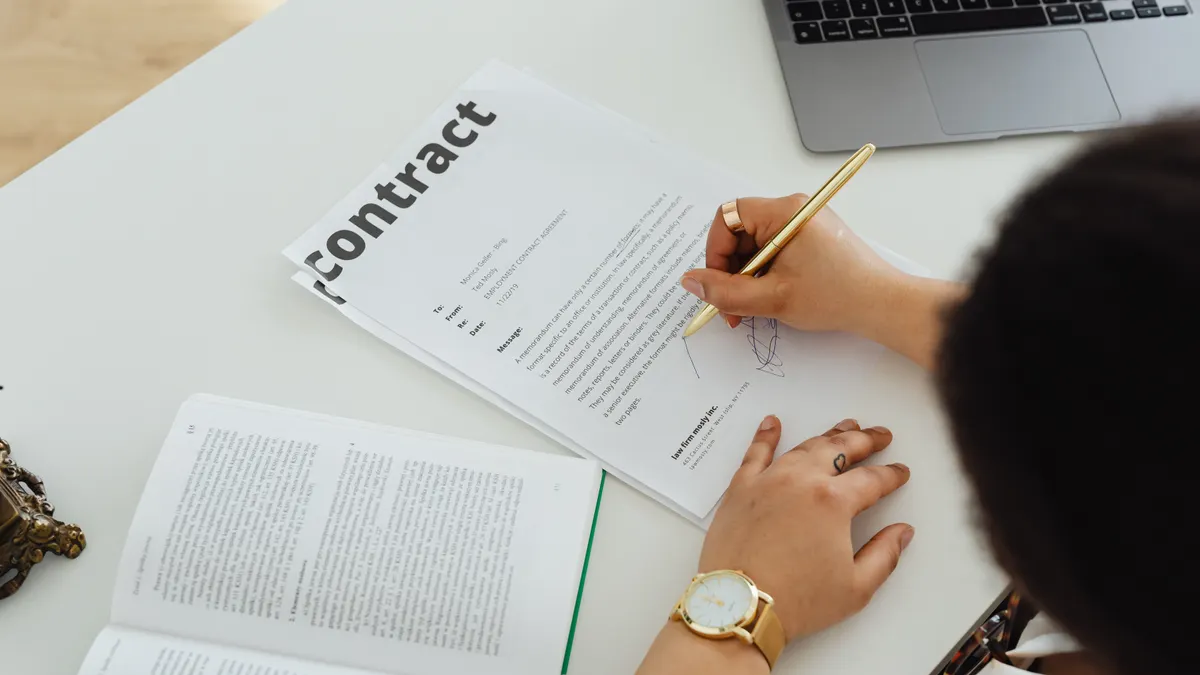
Contingencies protect you by giving you a legal exit if a condition is not met. In plain English, they are the clauses that say, “if this doesn’t happen, you can cancel or renegotiate.”
Picture this: you’ve agreed to buy a house, but the inspection turns up a roof issue or your lender needs more time. A contingency can keep you from being trapped in a deal that no longer makes sense. The catch is that the protection only works if you meet the notice rules and dates written into the contract.
Look for these common contingencies:
- Inspection contingency: Gives you time to inspect the property and ask for repairs, credits, or cancellation.
- Financing contingency: Protects you if your loan is not approved by the stated deadline.
- Appraisal contingency: Helps if the property appraises below the contract price.
- Title contingency: Lets you review title issues before the deal goes forward.
Read the removal language carefully. Some contracts require written notice to preserve the contingency; others require you to remove it by a specific hour on a specific date. If the contract does not spell that out clearly, consult your agent or a real estate attorney before you assume the clause still protects you. Miss that deadline, and the clause may vanish even if your concern is real.
On the flip side, a contract with very few contingencies can look attractive to a seller and dangerous to a buyer. That does not automatically make it bad, but it means your risk is higher and your time to react is shorter. No contingency, no cushion.
Which deadlines in the purchase agreement matter most?
The deadlines that matter most are the ones tied to money or cancellation rights. If you miss them, the contract can move forward without your approval or your leverage.
Picture this: you’re busy, the calendar is crowded, and the contract has five dates that all look alike. The way through is to turn every deadline into a real calendar event with a reminder, then check which ones depend on written notice. Here’s why that matters: a deadline buried in paragraph 18 still counts.
Use this list to track the dates that deserve immediate attention:
- Earnest money due date — When the deposit must be delivered and where it must go.
- Inspection period end date — When your right to request repairs or cancel may expire.
- Loan application deadline — When your financing steps must be underway.
- Appraisal or underwriting deadline — When lender review must be complete.
- Closing date — When ownership is scheduled to transfer.
After you mark those dates, write down the action required for each one. Some deadlines need a form. Some need an email. Some need a signed notice delivered to a named person. If the contract says “time is of the essence,” the safest approach is to treat the date as a hard stop and confirm it with your agent or attorney before you rely on any grace period. Real estate contracts can enforce timing strictly, so a local professional should verify the rule in your state; see the CFPB’s guide to buying a home for contract and closing timing basics: https://www.consumerfinance.gov/consumer-tools/buy-a-home/.
The best part is that a deadline chart is simple enough to make in five minutes, and it can save you from a very expensive mistake. A buyer who tracks dates usually spots trouble early. A buyer who relies on memory usually does not.
What fixtures, repairs, and addenda should you look for?
You should look for anything that changes what stays with the home, what gets fixed, or what overrides the main contract. These are the lines that often surprise buyers because they sit in addenda, not in the big printed sections.
Picture this: the house looks finished, but the seller plans to take the dining-room chandelier, the washer and dryer, or the wall-mounted TV bracket. That’s why fixture language matters. A fixture dispute can feel small until the day you move in and half the room is gone.
Check for these details:
- Fixtures and exclusions: Confirm what stays, what goes, and what the seller can remove.
- Repair addenda: Read who pays, what gets repaired, and whether receipts or licenses are required.
- Personal property lists: Make sure anything “included” is named clearly.
- Change orders: Look for later edits that rewrite an earlier promise.
- Conflict clauses: See which document controls if the addendum and main agreement disagree.
Addenda deserve special attention because they often carry the real deal terms. A one-page addendum can change a closing date, shift repair responsibility, or limit the seller’s duty to fix something. If the addendum says it “amends and controls,” assume it matters as much as the main contract—sometimes more.
Don’t skim the signatures, either. If an addendum was added after the original agreement, make sure everyone signed the same version. A missing signature can leave a promise shaky or disputed.
What does the default section mean for you?
The default section tells you what happens if someone doesn’t follow the contract. It covers missed payments, late notices, broken promises, and the remedies each side can use.
Picture this: the deal starts fine, then one deadline slips or one side refuses to perform. The default clause is where the contract says whether the other party gets to keep the deposit, demand more time, cancel, or pursue damages. That is not decoration; it is the enforcement engine.
Read for these items:
- Notice requirements: Does the other side have to warn you before claiming default?
- Cure period: Do you get a short window, often measured in days, to fix the problem? If the wording is vague, consult your agent or attorney before assuming the clock works in your favor.
- Deposit remedies: Can the seller keep the earnest money, or must it be returned?
- Specific performance: Can one side force the other to complete the deal?
- Attorney’s fees: Who pays if the dispute turns into a fight?
The honest trade-off is this: contracts with strict default language can protect one side and squeeze the other. If the terms are one-sided, you may be taking on more risk than you expected. That is a reason to ask for cleaner wording before you sign, not after.
For broader home-buying context, the home buying and offer strategy hub can sit above this page as the next stop. This guide stays on the contract itself, because that is where the risk lives.
What should you do before signing the final page?
You should compare the final version against every note you made and confirm that the contract still says what you agreed to. The last read is about consistency, not speed.
Picture this: the deal is close, the signatures are in front of you, and everyone wants to move on. That is exactly when buyers miss a changed date, a removed contingency, or a new addendum that slipped into the packet. Slow down long enough to catch the mismatch.
Before you sign, do this last check:
- Compare the purchase price, deposit, and closing date across all pages.
- Confirm every contingency deadline is still present.
- Make sure all addenda are attached and signed.
- Verify fixtures, repairs, and exclusions one more time.
- Ask for any blank spaces to be filled before signing.
If something changed, ask for the revised page, not a verbal promise. A promise in the room is easy to forget. A signed page is what the contract follows.
And if a clause still feels unclear after a second read, that is not a reason to “trust the process.” It is a reason to get the wording explained and corrected before your name goes on the line.
What should I look for in a purchase agreement?
You should look for the money terms, the deadlines, the contingencies, and the list of what stays with the property. Those are the parts that can change your cost or your exit rights fast. Also check the default clause, because it tells you what happens if the deal goes off track.
Can I negotiate a purchase agreement?
Yes, many parts of a purchase agreement can be negotiated before you sign. Buyers often ask to change deadlines, contingency terms, included fixtures, repair language, or the closing date. The key is to get every change into the written contract or an attached addendum, not a side conversation.
What is an addendum in real estate?
An addendum is a document added to the purchase agreement that changes, explains, or adds terms. It can cover repairs, dates, included items, or other deal points. If an addendum conflicts with the main contract, the version that says it controls usually wins, so read it as carefully as the original agreement.
Drafted with AI; not yet reviewed by a person.
