Last updated: September 10, 2026
Key Takeaways
- A $40,000 kitchen project in a home that will not support it may not bring $40,000 back.
- This guide is for a homeowner who is preparing to list within the next 30 to 90 days and wants a practical plan, not a slogan.
- Plan the first 7 days deliberately.
- The first 24 to 72 hours should not be casual.
Three things drive a strong sale: price, presentation, and timing. In this home selling listing strategy — complete guide, those pieces need to line up so buyers trust the listing from the start. Miss the mark, and the property can sit; then buyers push harder, and each week on the market makes the place feel older than it is. Get it right, though, and the home feels easy to buy. Even in a slow market.
Who this guide is for — and who should do something else

This guide is for a homeowner who is preparing to list within the next 30 to 90 days and wants a practical plan, not a slogan. I’m assuming you already know the basics: you have something to sell, you know a listing goes public through the MLS (multiple listing service), and you are weighing how to price, present, and launch it. I’m also assuming your goal is the best likely net outcome, not just the biggest headline number.
Not for everyone, though. If you need a guaranteed date, cannot live with uncertainty, or are selling under legal pressure such as probate, divorce, foreclosure, or a court deadline, the playbook changes because time, consent, and document control matter as much as market value. And if the property has major defects that are hidden, disputed, or regulated — foundation movement, unpermitted additions, active water intrusion, mold, or a title problem — I would not treat this like a normal listing decision. Talk with a qualified real estate agent, attorney, or other licensed specialist to confirm what must be disclosed and what can be marketed safely; for general disclosure guidance, see the FTC’s real estate consumer information and the CFPB’s home-selling resources.
A standard residential sale works best when the owner can spend 2 to 6 weeks getting ready, can base pricing on local comparables, and can tolerate some inconvenience for showings and inspections. If that sounds like your situation, this home selling listing strategy — complete guide will help you pick a launch plan, avoid price traps, and read what buyers are taking from your photos, remarks, and first 7 days on market. Selling a condo with an HOA, a tenant-occupied unit, or a luxury property over the local median? I cover those adjustments later, because the default approach shifts in each case.
What is the listing strategy, really?
It’s the sequence of choices that shapes how buyers first encounter the home, what they think it’s worth, and how quickly they move. Not just the asking price. It includes the list price, the photo order, launch timing, showing rules, the terms you’ll accept, and the point where you cut price instead of waiting.
The weak version usually looks familiar: the owner leans on hope, posts the house before it’s ready, and then “tests the market” for 30 days. Harmless sounding. In practice, it often means the property burns through its freshest days while buyers line it up against better-prepared homes. In many places, the first 7 to 14 days get the most attention because that’s when the listing is newest in the MLS and on consumer portals. I’m not giving a universal percentage because local behavior varies, but that early window still matters enough that you should treat it like opening night, not a soft launch.
What does the right approach ask? One question: what price and presentation will give a buyer a believable reason to act now? Sometimes that means pricing at market value and showing the home in top shape. Sometimes it means pricing a little below the likely sale range to pull in more traffic and create competition. That second route is not magic. It is a bad fit for a seller who cannot handle bidding, cannot accept a range of outcomes, or needs the home to appraise high enough for a specific financing plan.
Here’s my working definition of good strategy: the listing should let a buyer understand the home in under 30 seconds, trust the price, and see one obvious next step. If the buyer has to decode what the house is, who it fits, and why it is priced that way, value is leaking. Fast.
How should I price my home before I list it?
Price from sold comparables, not from the number you want or the highest active listing nearby. A sold comparable, or “comp,” is a property that actually closed and is similar in location, size, layout, age, condition, and lot features. Active listings show competition; sold comps show what buyers have recently paid.
Start with sales from the last 30 to 90 days if your market moves quickly, or the last 3 to 6 months if turnover is slower. Compare homes within the same school zone, subdivision, building, or tight neighborhood boundary if possible. Then mentally adjust for differences buyers notice right away: a renovated kitchen, a finished basement, a larger lot, a garage, a view, a pool, or a busy road. A 150-square-foot gap, a second bathroom, or a major cosmetic update can change interest materially, so if the weighting feels murky, ask a local licensed real estate professional or appraiser for help.
Then set a price band, not a wish price. I’d usually think in terms of a target and a floor. The target is the number that fits the data. The floor is the lowest figure you would take before the market itself has told you the first price was off. List at the top of the range when the home is not clearly better than the comps, and you’re probably inviting a later cut. List below the range, and you may get more showings but leave money on the table unless the lower number is part of a deliberate bidding plan.
This is where a lot of sellers trip over their own math: they choose a list price based on what they “can’t take less than.” Buyers do not care about your mortgage balance, your purchase price, or the sweat equity you put in. They care about alternatives. If the house down the street has a newer roof, better light, and a cleaner finish, yours has to compete on value, not emotion.
For unusual homes — acreage, historic, waterfront, or custom-built — the comp set may be thin, and pricing gets less exact. In that case, I’d still use sold data, but I’d be more careful about small sample sizes and more willing to price for attention rather than perfection. A narrow comp set is a reason to be humble. Not to guess harder.
The 7-step home selling listing strategy I would follow
Treat the listing like a project with a launch date, not a pile of chores. Order matters; a bad first impression is hard to undo, and this home selling listing strategy works best when each step is finished before the next one starts.
- Set the selling target in writing. Write down your minimum acceptable net, your preferred closing window, and the terms you care about most, such as rent-back, inspection limits, or a specific closing date. Keep it to one page. Verify that your target is based on current debt payoff, commission, transfer taxes, and expected repair credits. A problem shows up if your “minimum” is just a wish number with no math behind it.
- Gather 5 to 10 sold comparables and 3 to 5 active competitors. Pull recent sales within about 0.5 to 2 miles for a suburban home, or within the same building, block, or micro-market if location matters more than distance. Verify square footage, lot size, year built, condition, and concessions. A problem shows up if your comps differ on a major feature buyers notice immediately, such as an extra bathroom, a water view, or a full remodel.
- Choose a launch price and a price band. Pick one number for the market and one number for your own decision-making, usually a review point after 7 to 14 days. Verify that the launch price creates a believable comparison against current alternatives. A problem shows up if the price depends on a future reduction to make sense.
- Prepare the property for photos before you think about photos. Declutter surfaces, remove about 30% to 50% of visible items from closets, counters, and shelves, and complete repairs that buyers will notice in the first minute: loose hardware, peeling caulk, burned-out bulbs, stained grout, chipped paint, and slow drains. Verify that each room has a clear function and enough space to read the layout. A problem shows up if the house still looks “lived in” in a way that hides square footage or light.
- Book photography, floor plan work, and any required documentation. A professional listing photo set is usually shot in a single session, and a floor plan can help buyers understand flow in under 60 seconds. Verify that the image order starts with the strongest exterior or main living space, not the garage or hallway. A problem shows up if the photos make rooms look dark, cramped, or oddly cropped.
- Write remarks that sell the right facts. Lead with the features a buyer can verify: updated HVAC, renovated primary bath, school zoning if it is allowed in your market, a finished basement, low-maintenance yard, or a 2022 roof. Verify that the language is accurate and compliant with fair housing rules. A problem shows up if the copy is fluffy, vague, or full of superlatives that can be challenged.
- Plan the first 7 days deliberately. Decide in advance when showings start, whether you will allow overlapping appointments, and what you will do if multiple offers arrive. Verify that the home is ready for same-day or next-day showings during the launch window. A problem shows up if the house is unavailable when demand is highest, because buyers will move on quickly.
What people miss is that the launch itself is a market event. The first 24 to 72 hours should not be casual. If the property is priced correctly and presented cleanly, you want exposure, quick feedback, and enough showing activity to tell whether the market agrees with you. When the listing is quiet in the first week, the issue is usually not “seasonality.” It’s price, presentation, or both.
How do I prepare the home so buyers do not discount it?
Remove friction. Don’t sterilize the place. Buyers need to picture themselves there in 30 seconds or less, and the fastest way to lose them is to make them work through clutter, odor, or maintenance clues before they can even read the space.
Start outside. The front door, porch, walkway, and mailbox matter more than sellers usually admit because they set the tone before anyone reaches the kitchen. Trim the plants, clean the entry, replace dead bulbs, and pressure-wash only if the surface can handle it. Inside, focus on the signals that say “care”: fresh caulk where it’s cracked, neutral touch-up paint, cleaned vents, aligned cabinet doors, working latches, and floors that do not squeak or stain visibly. You do not need to remodel everything. You do need to remove easy objections.
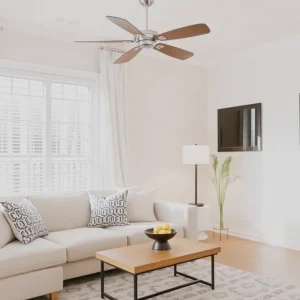
Staging that works is usually editing, not buying furniture. A room with 2 oversized chairs, 1 small table, and a clear path will show better than one with 7 decorative objects and a blocked window. A closet should look like it still has room, not like it’s bursting. Countertops should be mostly empty. In kitchens and baths, buyers catch the shine of cleanliness fast: faucet spots, shower glass, grout lines, and under-sink clutter. If the home gets strong natural light, don’t bury it under heavy drapes or dark blinds.
Odor deserves attention too, because smell can sink a showing in under 10 seconds. Tobacco smoke, strong pet odor, mildew, and heavy fragrance all make buyers wonder what’s being hidden. If the house has a persistent odor from the HVAC, carpet, or moisture intrusion, masking it is the wrong move. Find the source and fix it, or at least disclose it if it cannot be resolved before listing.
There’s a money side here as well. Some pre-listing work returns very little. A brand-new kitchen in a neighborhood of otherwise midrange homes can be expensive and may not come back in full. A clean, bright, freshly painted house with minor repairs finished often beats a partially remodeled one that still has visible defects. The buyer’s first thought is not “how much did this cost?” It’s “how much will I have to do?”
What should be in the listing itself?
A listing should tell a buyer three things clearly: what the home is, why it is worth the price, and what happens next. Miss any one of those, and the job is incomplete.
Photos are the front door. Use enough to tell the full story, but not so many that repetition makes the home feel smaller. Lead with the strongest image, usually the front exterior in good light or the main living area if the exterior is ordinary and the interior is the real asset. Include every room that matters: kitchen, primary bedroom, baths, living areas, basement if finished, yard, garage, and any special feature such as a mudroom, office, or workshop. If a room is awkward, show it honestly instead of cropping it into something deceptive. Buyers will see it in person anyway.
The description should be specific. “Beautiful home with upgrades” says almost nothing. “3-bedroom, 2.5-bath home with a 2019 roof, updated primary bath, 9-foot main-floor ceilings, and a fenced backyard” gives a buyer something real to judge. If the property has a less obvious selling point — a quiet dead-end street, walkability, single-level living, low HOA dues, or a flexible bonus room — put that in the first few lines. That opening space is where readers decide whether the listing fits them.
Terms matter too. If the home has a tenant, a preferred leaseback, an HOA with fees and restrictions, or a lot split that has not been fully approved, the listing should say so accurately. Hiding the hard parts just creates wasted showings and later contract problems. Clear terms are not a weakness. They’re a filter.
Watch the language. Fair housing law does not leave room for steering or coded claims about who “belongs” in the neighborhood. If you are unsure what wording is safe, stick to the factual description of the home itself and leave out anything that sounds like a demographic signal. This is one place where a qualified agent or attorney earns their keep.
When should I stop the standard approach?
Stop the standard approach when the home, the timing, or the paperwork no longer fit a normal listing. These are the situations that change the plan, because pushing ahead blindly usually costs more than pausing.
Major repairs are still unresolved: active roof leaks, foundation movement, failed HVAC, or significant water intrusion change the buyer pool and the financing path — fix the issue, price for the defect, or list only after you know how disclosure will work.
The property cannot show safely or legally: exposed wiring, blocked exits, unpermitted work that affects safety, or hazardous conditions can stop a sale or trigger lender concerns — correct the issue before a broad launch.
The title is not clean: liens, estate issues, missing signatures, boundary disputes, or unresolved ownership questions can derail closing — get title and legal help before you go live.
You need a guaranteed move-out date: if your next purchase, relocation, or landlord deadline leaves no flexibility, a normal open-market sale may fail your real goal — consider a longer escrow, rent-back, or a different sale structure.
The home is tenanted and access is limited: poor showing access can cut demand and frustrate buyers — negotiate a showing plan with the tenant first, because a property that cannot be shown well is hard to sell well.
The market is unusually thin for your property type: acreage, luxury, historic homes, or unusual layouts may not have enough buyer traffic for a quick conventional launch — widen the comp set and expect a longer timeline.
Ignore those situations, and the result is usually one of three things: fewer buyers, weaker offers, or a contract that falls apart late. I’d rather see a seller slow down for 10 days to fix a title or disclosure problem than spend 45 days on market creating confidence problems that no price cut fully cures.
The mistakes sellers make most often
The biggest mistakes are ordinary, which is exactly why they do so much damage.
First, sellers price to the dream outcome instead of the current market. The consequence is stale days on market and later reductions that signal weakness. The better move is to price from sold comps and choose the launch number on purpose.
Second, sellers over-renovate before listing. A $40,000 kitchen project in a home that will not support it may not bring $40,000 back. The better move is targeted prep: paint, lighting, repairs, and cleaning before expensive upgrades.
Third, sellers hide problems hoping the buyer will miss them. That usually leads to inspection disputes, credits, or a collapse in trust. The better move is to disclose accurately and decide whether to fix, price, or accept the defect.
Fourth, sellers treat photos as an afterthought. Dark images, crooked horizons, tiny room crops, and bad sequencing make the home feel smaller and older than it is. The better move is to plan the visual story first and hire someone who knows listing photography, not just social-media shots.
Fifth, sellers get too attached to the listing remarks and showing feedback. A comment about a small bathroom or dated carpet is not a personal insult; it’s data. The better move is to look for repeated patterns across 5 to 10 showings, not react to one stray opinion.
Sixth, sellers stall after the first 2 weeks. By then, the market has already formed an opinion. The better move is to review traffic, saves, calls, and showings quickly and decide whether the issue is price, presentation, or both.
What changes when the home is unusual?
Adjust the strategy when the home sits outside the normal buyer pool. A townhouse, a standard single-family home, and a 4-acre rural property do not behave the same way.
Luxury homes bring a smaller buyer pool, so presentation matters more.